Tuesday, February 22, 2011

News Flash: Celebrating Mabel Dodge Luhan's birthday on February 26th

Invitation to a special event
at the Mabel Dodge Luhan House Classroom
Saturday, February 26th from 6 to 8 p.m.

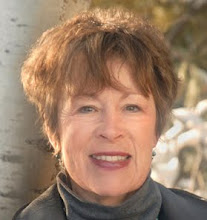
Actress and playwright Leslie Dillen as Mabel
The Mabel Dodge Luhan House invites the public to the first salon celebrating Mabel’s birthday, Saturday, February 26th 6-8 p.m. at the Classroom. The evening event begins with a twenty-minute dialog between “Mabel”, played by Leslie Dillen (who wrote and performed “The Passions of Mabel Dodge Luhan”) and Lois Palken Rudnick, Mabel’s biographer (author of Utopian Vistas: The Mabel Dodge Luhan House and the American Counterculture and most recently Cady Wells and Southwestern Modernism). The audience will then be invited to participate in discussion around questions raised in the dialog.

Afterwards, everyone is invited to a booksigning of the newly published Mabel Dodge Luhan in Her Own Words and to partake of refreshments.

Proceeds from the book sale go towards preservation of the Mabel Dodge Luhan House (on both the National and State Register of Historic Places).

Call 575-751-9686 for further information.

Monday, February 14, 2011

The Heat is Back On: Coping at the Mabel Dodge Luhan House during the natural gas outage

You may have heard about the recent crisis in the Taos area caused by the natural gas outage. Residents first learned of the situation on Thursday morning, February 3rd. The first communication I received came when Town of Taos Public Relations Officer, Cathy Connelly, sent out word informing the citizens of Questa, Red River and Taos of the shutoff of natural gas forecast to last for a prolonged period of time. She and local radio hosts went into state-of-emergency media coverage until the situation was resolved. That evening an arctic cold front dropped temperatures to 25 below zero, and it stayed frigid for days.

This past Saturday when I drove to the Mabel Dodge Luhan House to learn how the staff survived the days without heat, Judi Jordan greeted me with “I think it will be days before I warm up.” Being cold and without heat both at work and at home left her drained. Judi told me that other people she talked to were exhausted by the cold.

Jessica and the hot plates that blew the fuses
Like other staff, Jessica Van Houten came prepared to work in the cold, wearing two pairs of long underwear under her snowboarding outfit. She arrived at the Mabel Dodge Friday at 4:30 a.m. to allow time for hot plates to warm up. With stoves and hot water heaters out of commission, electricity provided the remaining heat source. While the hot plates heated, Jessica began started the coffee machines and the microwave. This overloaded the circuit and blew all the fuses. No hot plates, no hot water. Ever resourceful, Jessica served intrepid guests yoghurt, cereal, applesauce, a fruit plate—and managed to provide them with hot coffee.
      
Staffer Diane de Fremery wrote up an event that took place later that day:

In spite of the cold, on Friday, February 4th we had the most superb Mabel moment. Approximately 20 people ventured out to come to a SOMOS reading by George Wallace, the 2011 Walt Whitman Birthplace writer-in-resident. We put the chairs around the fireplace in living room. There was no heat in the classroom, plus we had [only a handful of guests] due to the crisis situation with no heat or hot water in the big house.
            It was intimate and reminiscent of days gone by when Mabel had her salons. There was also live music provided by Juilliard graduate Abbie Conant between the readings. It was a special evening.

Judy Barber, a writer from Sausalito, CA, told me about her experience. She arrived on Saturday, February 5th, two days in advance of the start of Natalie Goldberg’s scheduled workshop. The rooms were so chilly that the staff offered to move the couch in front of the fireplace to keep her warm at night. Judy commended the Mabel Dodge’s caretaker, Jamison Nicolazzo and his girlfriend Dionne, who checked on the house every three hours during the night and brought in more firewood for her use. That evening electricity went out, and Judy spent most of the night in the dark. She felt an obligation to keep the fire burning, and awoke every two hours to feed the fire.

On Saturday I spoke with Judi Jordan, on duty over the weekend, and asked her if she would comment on her experience. She had been without heat and hot water both at work and at home. She thought of the bitter winter cold pioneer women must have endured, how they probably never got really warm. Judi wrote in her journal: “When it’s this cold, all you're trying to do is put your head down and endure.” While persevering, Judi thought of a passage from Natalie Goldberg’s Long Quiet Highway, words appropriate to her situation and that of thousands of other Taosenos:

The next morning had been very cold. There was frost on the bell. We hadn’t expected it to get that cold that early in the year. After all, we slept and sat in tents. After the two periods beginning at 5 a.m., I was signed up to be the breakfast server. Servers never wore socks or gloves. I have to bow, barefoot, with my big pot of steaming rice in front of each student, then kneel on the ground and serve them—they were all sitting on the floor on cushions—then lug up the pot and go to the next person. I was cold. Roshi was the last person to be served. I couldn’t wait to get it over with, to run out of the tent and put on my socks and gloves. As I knelt in front of Roshi, about to scoop a ladle of rice into his bowl, he sharply, clearly said to me, “Eat the cold.” I took a deep breath, slowed down, and tried  to open to the weather. This man wasn’t kidding around. Don’t run away, even from the cold—digest it, he was saying. And he meant this for all my life, not just the moment I was there.*

“It’s really hard to eat the cold when the cold lasts this long,” Judi said. She added her thoughts on how this experience would teach us to be more compassionate and caring of others. It also highlighted how dependent our society has become on large corporations, and how this might teach us to become more self-reliant.

Four days later, on Monday February 8th, Taosenos finally fought back. The relighting process conducted by the gas companies had gone much too slowly, people and businesses had suffered enough. The local media got out the word that if people would call qualified plumbers, they could have the relighting work done themselves. A plumber relit the gas at the Mabel Dodge Luhan House just hours before Natalie’s group of 26 showed up for a five-day workshop. When the gas came on, Chef Jane Garrett immediately began cooking. The kitchen heated up and became the warmest, most appealing place in the house.

Wood fire warmth

Under these circumstances, it seemed appropriate to close with Mabel’s description of her kitchen:
           
That’s the nicest room in the house from eight to ten in the morning. All the woodwork is painted blue and the walls are whitewashed. There is a long table in the center with a blue oilcloth on it, and a big blue stove burning cedar wood.
            A long row of windows facing east, lets in plenty of sunshine across the geraniums, and there is a breakfast table under the windows on the west side of the room. There is always a lovely smell of oranges and coffee, bacon and eggs and toast out there at that hour, and the men love to eat breakfast there, close to the Source, with the cheerful hum and bustle of cooking going on, the eggs sizzling on the plate, the butter melting on the crisp toast.**
 I leave you with Mabel’s kitchen portrait as we continue to recover and warm up aqui en Taos (here in Taos).

Adios for now, let Valentine’s Day warm your heart,

Liz

*The quote from Long Quiet Highway appears on page 194, Bantam Books 1994 edition.
**Quote taken from Winter in Taos, Palomas de Taos 1996 edition, page 23.

Monday, January 24, 2011

Profiles: Introducing Karen Young of the Mabel Dodge Luhan House staff

Today I interviewed Karen Young, my first profile on the remarkable women who staff the Mabel Dodge Luhan House. Although her main duties involve educational programming and marketing, like her co-workers, Karen’s life extends beyond the walls of the Mabel Dodge. Here’s her story:

Karen Young feeding breakfast to her alpacas

A background in anthropology and work in archeology led to Karen’s first trip to Taos in 1969. Through a private field school for high school students conducted at Southern Methodist University’s Fort Burgwin,  11 miles outside Taos, she and her archeologist  husband Jon spent four seasons with students from Picuris Pueblo, California and other states conducting a month-long dig at Pot Creek site. During that time, the two became acquainted with the Kit Carson Foundation director Jack Boyer, in charge of three museums--the Kit Carson Home, the Blumenschein Home, and the Hacienda de los Martinez.

Five years later, the couple packed up the family and moved to Taos, a move made possible by Karen’s creativity. With Jack Boyer’s support, she wrote a successful National Endowment for the Humanities grant and created a job for herself and Jon developing an interpretive plan for the Blumenschein Home, the Martinez Hacienda and the Taos Morada. During this time, the Youngs lived in a part of the Blumenschein Home while they built their first home—an adobe designed by Karen.

The NEH grant funded the Young’s first year in Taos, allowing just enough time for Karen and Jon to provide the family with a roof over their heads…the interior was still under construction. Karen remembers the day they moved in -- May 8th -- because it snowed. After the NEH funding ended, Karen and Jon scrambled to survive. Painting fences, sporadic jobs at the Katchina Lodge and the Abominable Snow Mansion, and other seasonal work kept them afloat until George and Kitty Otero, then owners of the Mabel Dodge Luhan House, asked them to help run the Global Realities program. Months later the Forest Service hired Jon as Forest Archeologist, and Karen’s Museum Studies degree landed her a job at the Millicent Rogers Museum. For the next seven years, work there as museum educator and acting director carried her through divorce, and almost through building her own pumice and adobe home.

When the Millicent Rogers Museum hired a new director, Karen suddenly found herself without a job due to cutbacks. Now single, she despaired at being unemployed and at the possibility of having to leave Taos. One day she ran into Pablo Trujillo, whose group Los Alegres had played traditional Hispanic music at the Mabel Dodge, at the post office. When Karen told him her news, he asked to see her hands. Examining them, he announced: “You’ll stay here. You have callouses.” Stay she did, finding work as director of the Northern Pueblos Institute through Northern New Mexico Community College, as co-director of the Taos Historic Museums (formerly the Kit Carson Foundation), and most recently back at the Mabel Dodge Luhan House.

Another kind of work opened up for Karen when her world took on a new dimension in the 1990s. She became interested in alpacas after meeting Phil Switzer from Estes Park, Colorado who brought some of his animals to the annual Taos Wool Festival in 1994. Right then Karen decided she would like to raise alpacas. She consulted with Phil who told her to talk to other breeders and attend alpaca association meetings. As it happened, the Alpaca Owners and Breeders Association held its annual meeting in Estes Park the following year. Karen attended the conference, went to lectures, talked to breeders and invested $5 in a raffle ticket for two machos or male alpacas. At the end of the conference, she checked to see who had won the raffle. Someone replied: “It was someone from New Mexico…name started with ‘W’.” Karen’s hopes were dashed, but only until someone else said: “Oh, the last name was Young.”

That’s how Morning Star Alpacas got its start…and that’s another story. Today Karen owns 31 alpacas. She manages to sustain them and her business through the occasional sale of an animal and the wool, and sometimes she shows her animals. Yet the alpacas help sustain Karen—caring for them keeps her active. She finds great joy in watching these calm, gentle animals from her living room window. The alpacas’ cycle of breeding, birthing, and aging echoes the change of seasons in Nature, and in Karen’s life in Taos.

Double rainbow over Karen's home
 In closing, I asked Karen to answer the question "What is it about Taos that invites women to be remarkable?" Her multi-pronged answers follow: "An environment that reaches out and enfolds you; finding new strengths with each challenge met; support from all cultures." I particularly liked her last statement: "The surprise of finding you've sincerely been accepted into the community." And the community benefits from Karen's presence.

Adios for now,
Liz

Monday, January 10, 2011

Mabel Dodge Luhan and Mark Twain – Reflections on Autobiography in the New Year

What a wee part of a person's life are his acts and his words! His real life is led in his head, and is known to none but himself....his acts and his words are merely the visible thin crust of his world...The mass of him is hidden -- it and its volcanic fires toss and boil, and never rest, night or day. These are his life, and they are not written, and cannot be written.... Biographies are but the clothes and buttons of the man -- the biography of the man himself cannot be written." -- from Autobiography of Mark Twain, Volume 1*

Over the holidays I immersed myself in the autobiographical works of “The Three Fates” -- Mabel, Frieda Lawrence and Dorothy Brett. I skimmed their works– including Mabel’s Winter in Taos, Frieda’s Not I But the Wind and Brett’s Lawrence and Brett -- mining them for answers to questions about the three women, and for topics for the blog. I came away wanting to know more -- their autobiographies left me unsatisfied, the writing didn't reveal nearly enough about them.

Cover of Winter in Taos, reprint, fourth printing 1996

I finally fastened onto Mabel’s four-volume autobiography, Intimate Memories, which she started in 1924. Mabel wrote of her early intent “I started out to try and show the inward picture of a person of my own period; what heredity and environment had made of her. I did not believe, and do not believe, that she was inwardly so different from a lot of others. She was a 20th century type.” Background (published in 1933) deals with her early life in her hometown of Buffalo, New York; European Experiences (1935) covers time spent in Italy at Villa Curonia; Movers and Shakers (1936) discusses her years as hostess of an avant garde salon in New York; and Edge of Taos Desert (1937) traces her journey to Taos, and meeting and eventually marrying Antonio Luhan from Taos Pueblo.

In each volume Mabel investigates a certain period of her life, each representing a phase that contributed to her search to make herself “real.” Her therapist A. A. Brill, America’s first practicing psychotherapist and the first to translate major works by Freud into English, had suggested she write about her life as therapy. Brill viewed the practice of psychotherapy as a way of giving meaning and structure to life, and so encouraged Mabel to write as a means of self-discovery.

Lois Palken Rudnick and I have discussed the writing of biography, in light of our own work [on Mabel Dodge Luhan and Ernest L. Blumenschein, respectively]. Our conversations have centered on how no matter how many letters, pictures, diaries, interviews, clippings and archival material we delved into, what emerged in the end was a partial portrait of our subjects. I suppose that’s why Mark Twain’s statement on biographies being “but the clothes and buttons of the man” struck me. The full life Mabel lived took place in her head, and could never be written in full.

That said, my goal for this coming year is to post brief sketches on Mabel, her circle, and generations of women who followed,  and to provide enough of a portrait for each of us to recognize ourselves in these women. For as Mabel herself stated, our stories are much the same -- the universal stories of the human race -- and there are life lessons to learn from everyone. Let this be part of our own self-discovery, part of becoming "real."

Happy New Year!

Adios for now,
Liz

* from "Riverboat Rambler" by Garrison Keillor. New York Times Book Review, Sunday, December 19, 2010: 7 -- Review of Autobiography of Mark Twain, Volume 1.

**Mabel Dodge Luhan to Hutchins Hapgood, 5 November ?, Hapgood Collection, Beinecke Library, Yale University, quoted in Intimate Memories: The Autobiography of Mabel Dodge Luhan, edited by Lois Palken Rudnick. (Albuquerque: University of New Mexico Press, 1999: vii).


Friday, December 24, 2010

Christmas Eve at Taos Pueblo and at the Mabel Dodge Luhan House

Throughout her life in Taos, Mabel attended various Pueblo celebrations. Of all of the holiday events, Christmas Eve at Taos Pueblo is one of the most special. The Pueblo people gather pitch pine, cut it to various lengths, and stack it criss-crossed to build ricks of wood from one foot to twelve feet high. These are lit just after dusk, and the whole area between the North and South houses come alive with bonfires. The fires light the Christmas Eve procession around the Taos Pueblo plaza that follows mass at the San Geronimo church. It's magical, as a description from D.H. Lawrence conveys:

Never shall I forget the Christmas dances at Taos, twilight, snow, the darkness coming over the great wintry mountains and the lonely pueblo, then suddenly, again, like dark calling dark, the deep Indian cluster -- singing around the drum, wild and awful, suddenly rousing on the lost dusk as the procession starts. And then the bonfires leaping suddenly in spurts of high flame, columns of sudden flame forming an alley for the procession.*

Over the years my friend Judith Bronner has photographed this event (here, the plaza in front of the North House at dusk, just before the procession), and I share one of her pictures with you.

"Christmas Eve", Taos Pueblo © 2010 Judith Bronner

When guests at the Mabel Dodge Luhan House return after the Pueblo festivities, a cheery fire and steaming bowls of posole await them. This spicy hominy stew, a dish for celebrating life’s blessings, is served throughout New Mexico. It can be made either with red or green chile. The recipe here (below), made with pork and using dried red chiles, is quite traditional. However, chicken, turkey, or vegetable protein may be substituted for the pork. Enjoy.

Adios for now,
Liz

Photo courtesy of Judith Bronner. Thank you, Judith! 

* Quote from "New Mexico" typescript, D.H. Lawrence Papers, AC 131-p, Angélico Chávez History Library, Museum of New Mexico, Santa Fe.


Posole Recipe:
12 dried long red chile**
3 pounds boned pork roast cut into 1" cubes
1/2 head of garlic peeled and chopped
A large pinch of Mexican oregano
1/2 large onion, chopped

1 large (industrial-size) can hominy 
Salt and pepper to taste

Directions:
1.Break open the chiles and remove the seeds and veins.
2. Put the chiles to cook in a medium sized pot. Cover with fresh water and gently boil until chiles are very soft.
3. Let the mixture cool and using a favorite method, blend the chile and the water to make a paste and strain.
4. Put the cubed pork, oregano, garlic, onion and salt into a large heavy pot and cover with water. Boil meat gently for 30 minutes.
5. When the meat is soft, add the chile and hominy and cook for 15 to 20 minutes until the mixture is boiling nicely. Add oregano, and salt and pepper to taste.

To serve, ladle the posole into heavy bowls and serve with thinly sliced cabbage and radishes, quartered limes, and fresh corn tortillas.
This recipe serves 20-24 people. 


**Using frozen or powdered red or green chile eliminates steps 1-3 -- the preparation and cooking time for the chile mixture.

Monday, December 20, 2010

Mabel Dodge Luhan's "Winter in Taos" -- and Solstice 2010


In reading parts of Mabel’s book, Winter in Taos, it occurred to me that she arrived in Taos in December 1916 – one hundred and four years ago. My reading turned up a section by Mabel that seems appropriate to this holiday season:

Tracks in the snow at the Mabel Dodge Luhan House

It is so good to ride horseback in the snow... the snow crunches under the horses hooves, and it is bright and sparkling to make one's eyes ache; but in the shadows, it is a vivid blue....From far away, down in the valley, we can hear a motor racing, or the high-school bell, or sometimes a rooster crowing out of the usual hours; we can see the smoke curling up from the cozy houses and it is pleasant to warm one's heart by these signs -- but sometimes when we are out riding, the snow begins to fall, softly. The sun goes and all the color. There is no wind and the big flakes come down in a leisurely way, turning over and over. Then there are no sounds to be heard except those very near us. We can hear our horses still crunching in the snow, and the dogs breathing, but we cannot see them a few feet away, for a snowfall shuts out the familiar sounds of life.

Among the Christmastime festivities celebrated at the Mabel Dodge Luhan House are a Winter Solstice sit and tea ceremony held before dawn in the classroom at Juniper House. My husband Skip and I attended last year. People arrived in the dark to luminarios lighting the walkway outside and a few candles burning inside on the stage and around the corner fireplace. After an opening ceremony, we sat in the still darkness for some twenty minutes, then did walking meditation. Sitting again, we watched as the celebrant began the tea ceremony. Just as he started whipping up the first cup of powdered green tea into a fine, delicate froth, the sun rose to illuminate the fragrant steam as he poured it—a truly magical moment in time.

This solstice will be marked by a full eclipse of the moon. It seems like an auspicious time. I hope, in the midst of busy preparations for the holidays, you will join me and take a moment for stillness, and to reflect on Mabel’s words:
Yet, if one listens, there is something else one can hear in the silence, something very different from the homely noises of the distant village. Another world is opened up to one in the cessation and the stillness, another music that is hidden deep within the world, that is usually inaudible and that is impossible to describe.
May you, on the occasion of this winter solstice, welcome the return of the Light, hold it and let it warm your hearts.

Liz


Saturday, December 4, 2010

Introducing Frieda Lawrence

Some time ago I promised to write something about Frieda Lawrence. Since then I have discovered several archival sources that have brought new insights on Frieda—for example, she served as an associate editor for the “New Mexico Writers” page of The New Mexico Sentinel newspaper in the latter 1930s. Although I have read some works on her, I am eager to discover more writing by her. Frieda was a fascinating woman. In The Genius and the Goddess, Aldous Huxley wrote that she was “Hera and Demeter and Aphrodite gloriously rolled into one.” In admiration, Tennessee Williams called her "a valkyrie…a real woman." Intriguing, to say the least. 

Frieda Lawrence, 1938 Courtesy of Jenny Vincent

In my quest to discover the real Frieda, I am following several leads, including setting up interviews with local people who knew her. In the meantime, for those of you who don’t know about her, I provide a few introductory paragraphs from an overview that Karen Young compiled before I became blog host. (Thank you, Karen.)

Frieda von Richthofen was born into an aristocratic family in Metz, Germany. In 1899 she moved to England after marrying the much older, Ernest Weekly, professor of French at the University College, Nottingham. After giving birth to three children, Frieda met the author D.H. Lawrence in March, 1912. Two months later the couple eloped to Europe.

After marrying in 1914, the Lawrences returned to England. At the outbreak of the First World War the authorities became concerned that Frieda was a spy. The couple settled at Zennor in Cornwall, but local people reported that the Lawrences were using the clothes hanging on their washing line to send coded messages to German U-boats. After searching their cottage, the authorities forced the Lawrences to leave the area.

 When D. H. Lawrence was diagnosed as suffering from tuberculosis, the couple went to live in Sicily. Over the next few years they also spent time in North America, Mexico and Australia. Novels published by Lawrence during this period included Women in Love (1920), Aaron's Rod (1922), Kangaroo (1923) and The Plumed Serpent (1926). He also wrote Lady Chatterley's Lover but unable to find a publisher, he had it printed privately in Italy.


New Mexico was the place in North America where the Lawrences spent the most time. In 1919, after British authorities relinquished D.H. Lawrence’s confiscated passport, he and Frieda eventually landed in Sicily. In November 1921, while the couple was living at Fontana Vecchia (“Old Fountain”) in Taormina, D.H. received a letter from Mabel Dodge Luhan inviting him to come to Taos.

After a side trip to Ceylon and Australia, the Lawrences finally arrived in Taos on September 11th, 1922 – on D. H.’s thirty-seventh birthday. Both were struck by the beauty of the landscape, as Lawrence would later write: “In the magnificent fierce morning of New Mexico, one sprang awake, a new part of the soul woke up suddenly and the old world gave way to the new.” *

Frieda echoed her husband’s words in her memoir, Not I, But the Wind: “A new life for us – and we began it straight away. Out from the pueblo to the east of us, a few miles away, came the feel of the Indians, so different from anything we had ever known.”

Frieda and D.H. Lawrence spent months in the Taos area in 1922-1923, 1924 and 1925. I will report on this time and the influence that northern New Mexico had on Frieda during this time of her life as soon as I complete my research.

Adios for now,
Liz

* This quote originates from D.H. Lawrence's article, "New Mexico", first published in Survey Graphic in 1928.